
Rock N Roll: How The Rolling Stones Mobile Studio helped create rock's defining albums
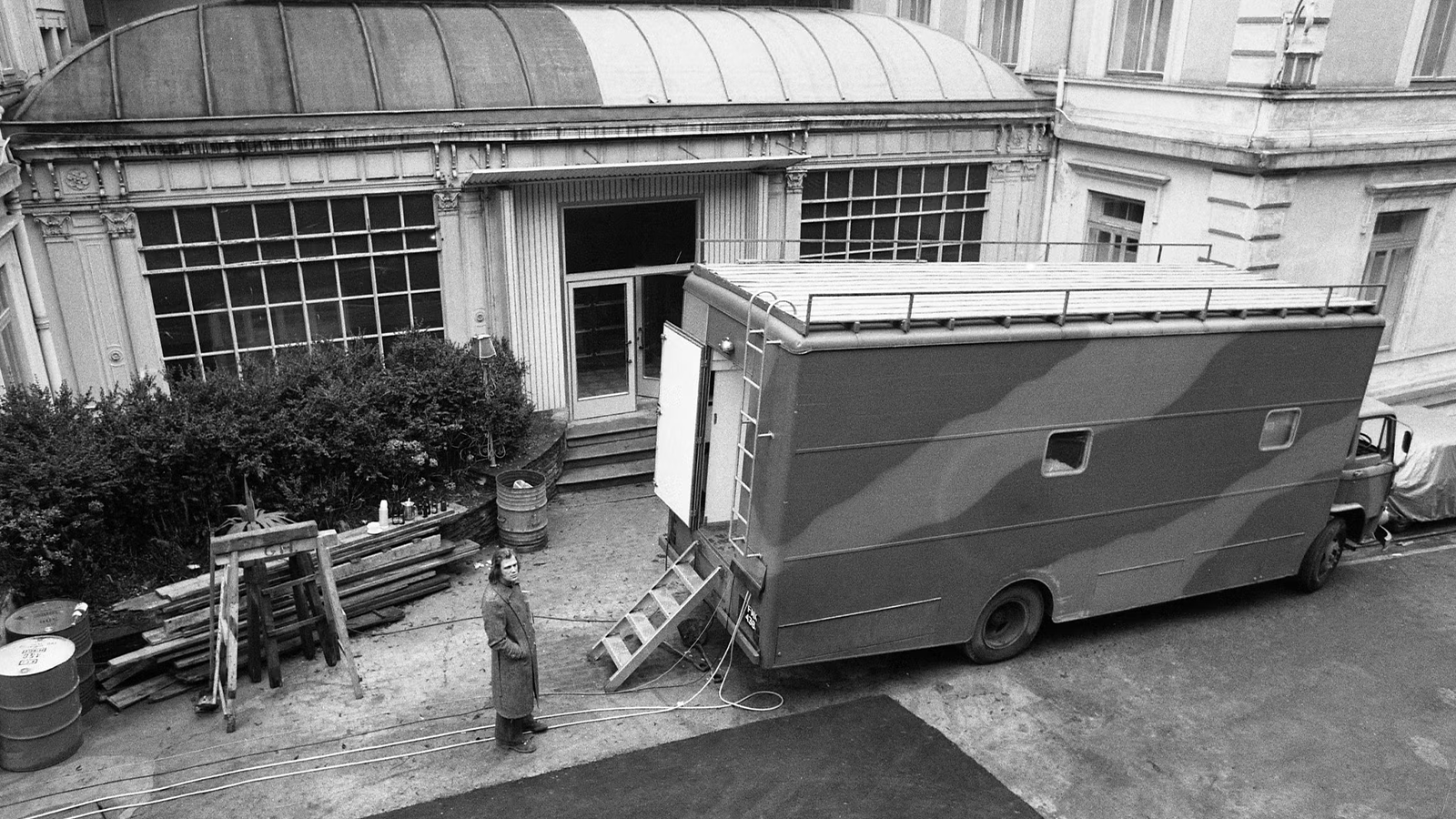
In December 1971, a recording truck sat outside the Montreux Casino, so Deep Purple could use the building as their live room. A flare gun was fired during a Frank Zappa concert, so the casino burned the night before tracking began. The band moved fast, so they recorded in the Pavillon and then the Grand Hotel. The moment became “Smoke on the Water,” because the lyric says they came to “make records with a mobile.” What was that mobile, and why did artists keep chasing it?
In 1968, the Rolling Stones wanted to escape nine to five studios, so they aimed to record at Mick Jagger’s Stargroves. They tried hauling gear into the house, so they hit a blunt problem: too much equipment, too much time, too much cost. Ian Stewart proposed a fix, so the control room would live inside a truck and only microphones would need to move. He worked with producer Glyn Johns, so the Mobile copied the logic of Olympic Studios’ control room while staying portable. No expense was spared, so its 3M M79 tape machine cost $79,000 at the time. That setup let the band record when ideas hit; even at 3am!
The method was simple: musicians played in the building, and the truck captured it, so unusual rooms became part of the sound. Led Zeppelin took the Mobile to Headley Grange, so the house became the live room while the truck outside handled the desk and tape. The Who used it at Stargroves, so early Who’s Next work could happen away from commercial rooms. Neil Young used it too, so the Mobile was not only for loud rock.
Freedom brought friction, because remote recording meant power limits, long cable runs, and bigger track counts. The Mobile survived because it kept upgrading, and it moved from 8 track to 24 track with more inputs, so larger sessions stayed practical.
After Ian Stewart died in 1985, the Stones sold the truck, so it entered a second life in new hands. In November 2001 it was acquired in Calgary and restored, so it could be preserved as a working studio at the National Music Centre. The “mobile” mattered because it turned almost any place into a recordable space, so bands stopped waiting for perfect studios and started building their own.



Comments
Riley Olivia — 1 day ago
I and my husband have been married for 22 years and for quite a long time now we have been living as strangers due to some marital issues and his inability to stand out to make things right. Unknown to me, there was some other lady in the picture who has been so daring and doing everything possible to ruin my marriage so she can fully take my place. i sought for help within my reach and nothing worked so i had to contact Dr osazuwa spell caster who inturn was so helpful and showed me how swift he tends to resolve marital issues for couples. He revealed to me all that happened between my husband and the said and he did everything possible with his powers and got them separated. My husband is fully back home to me and our girls and it gladdens my heart so much. Dr osazuwa spell caster is trustworthy enough to deliver whenever you call on him for his help to fix your problems.
CONTACT SPIRITUAL HIGH CHIF PAPA OSAZUWA FOR HELP TO SOLVE YOUR RELATIONSHIP OR MARRIAGE ISSUES
via WhatsApp : +2347031497107
Email: drosazuwaspell@gmail.com
Hackers Panel — 1 day ago
⬛️ ARE YOU SEEKING TO RECOVER YOUR LOST FUNDS FROM INVESTMENT/TRADING SCAM OR ROMANCE SCAM? OR YOU NEED LEGIT HACKING SERVICES SUCH AS PHONE HACK, WEBSITE HACK AND MORE??? TAKE YOUR TIME TO READ
⬛️ We have received numerous complaints of fraud associated with Internet Scam, Romance Scam, Trading Scam, Investment Scam and Other Scams.
Most Of these complaints falls into these three categories:
1. 🔘Refusal to credit customers accounts or reimburse funds to customers:
These complaints typically involves customers who have deposited money into their trading or investment account and eventually got deprived from withdrawing their capital and profits by the trading platforms.
2. 🔘Manipulation of software to generate losing trades:
These complaints alleged that the Internet-based Investment and trading platforms manipulate the trading software to distort the Trading prices and payouts in order to ensure that the trade results in a Loss.
3. 🔘 Romance Scam where a scammer pretends to have romantic interest in someone to gain their trust—and then uses that trust to steal money or personal information.
⬛️ Most people have lost their hard earned money through these types of Scams but don’t know how to get a Legitimate Funds Recovery Expert.
Truth be told, the only Specialists that is capable of retrieving your lost funds to these scams are Team of professional hackers and cyber forensic experts and this is where FUNDS RETRIEVAL PANEL comes in.
FUNDS RETRIEVAL PANEL is an amalgamation of top notch Hackers, Cyber forensic Experts, Software Engineers and Backend Gurus who are dedicated to helping victims retrieve their Lost funds from online scams and frauds. We are the Leading Funds Recovery Expert who know various Retrieval Techniques and Strategies that suits different scenarios of Scam. With years of experience in the financial and tech sectors, we are the trusted solution for individuals looking to recover lost money.
CONTACT US NOW to schedule your free consultation and start the process of recovering your funds.
🌍 www.fundsretrievalpanel.com 🌍
📩 info@fundsretrievalpanel.com✉️
☑️ We Also have a segregated Department that focuses on other LEGIT HACKING SERVICES SUCH AS:
▪️ PHONE HACKING & CLONING 📱
▪️ WEBSITE AND DATABASE HACKING 💻
▪️ CLEARING OF CRIMINAL RECORDS.
▪️ SOCIAL MEDIA ACCOUNTS HACKING 📱
▪️LOCATION TRACKING 📌
CONTACT:
📩 hackpanel@techie.com
Dorothy Scott — 2 days ago
Hire The Best Cryptocurrency Recovery Experts / Alpha Recovery Experts
At ALPHA RECOVERY EXPERTS, They stand behind their commitment to provide unmatched expertise, cutting-edge technology, and ethical practices for crypto recovery. By entrusting your crypto recovery needs to ALPHA RECOVERY EXPERTS, you can rest assured that your assets are in capable hands, ready to be recovered and restored. Their proven track record of success and focus on transparency and client communication set us apart as the gold standard in the industry.
To learn more about their services and how Alpha Recovery Experts can help recover your crypto from scams, please feel free to contact them through the following channels:
WhatsAp/Text: +44(745)742-4681
Email: Info@ alpharecoveryexpert. c om
Website; Alpharecoveryexpert. com
Dorothy Scott — 2 days ago
Hire The Best Cryptocurrency Recovery Experts / Alpha Recovery Experts
At ALPHA RECOVERY EXPERTS, They stand behind their commitment to provide unmatched expertise, cutting-edge technology, and ethical practices for crypto recovery. By entrusting your crypto recovery needs to ALPHA RECOVERY EXPERTS, you can rest assured that your assets are in capable hands, ready to be recovered and restored. Their proven track record of success and focus on transparency and client communication set us apart as the gold standard in the industry.
To learn more about their services and how Alpha Recovery Experts can help recover your crypto from scams, please feel free to contact them through the following channels:
WhatsAp/Text: +44(745)742-4681
Email: Info@ alpharecoveryexpert. c om
Website; Alpharecoveryexpert. com
Dorothy Scott — 2 days ago
Hire The Best Cryptocurrency Recovery Experts / Alpha Recovery Experts
At ALPHA RECOVERY EXPERTS, They stand behind their commitment to provide unmatched expertise, cutting-edge technology, and ethical practices for crypto recovery. By entrusting your crypto recovery needs to ALPHA RECOVERY EXPERTS, you can rest assured that your assets are in capable hands, ready to be recovered and restored. Their proven track record of success and focus on transparency and client communication set us apart as the gold standard in the industry.
To learn more about their services and how Alpha Recovery Experts can help recover your crypto from scams, please feel free to contact them through the following channels:
WhatsAp/Text: +44(745)742-4681
Email: Info@ alpharecoveryexpert. c om
Website; Alpharecoveryexpert. com
carla — 3 days ago
Get a loan within 24 hours.
We are a certified, reputable, legitimate, and accredited private creditor. Do you have a bad loan or need money to pay your bills and start a business? The loan amount ranges from 50,000 to 14 million crowns, with a reasonable interest rate of 3%. For more information, contact: credoloansptyltd@gmail.com
LEGIT LOAN FOR ALL
carla — 3 days ago
Get a loan within 24 hours.
We are a certified, reputable, legitimate, and accredited private creditor. Do you have a bad loan or need money to pay your bills and start a business? The loan amount ranges from 50,000 to 14 million crowns, with a reasonable interest rate of 3%. For more information, contact: credoloansptyltd@gmail.com
LEGIT LOAN FOR ALL
Poppy Dickson — 4 days ago
GET IN TOUCH WITH A LICENSED WIZARD RECOVERY HACKER FROM BLISSPARADOX
It’s unfortunate that a lot of people are being conned by cryptocurrency investment platforms. It hurts that the majority of scam victims are unaware of Blissparadox recovery, which can assist them in recovering every coin that was invested and taken by the con artists. If you have ever been a victim of a cryptocurrency scam, contact Blissparadox because I am a living example.
Mail: blissparadoxrecovery@aol.com
WhatsApp :+ 447935211678
Signal :+ 447935211678
website : https://blissparadox-recovery.lovable.app