
Alternate Takes : How Mani Kaul became a defining voice in India's Parallel Film Movement
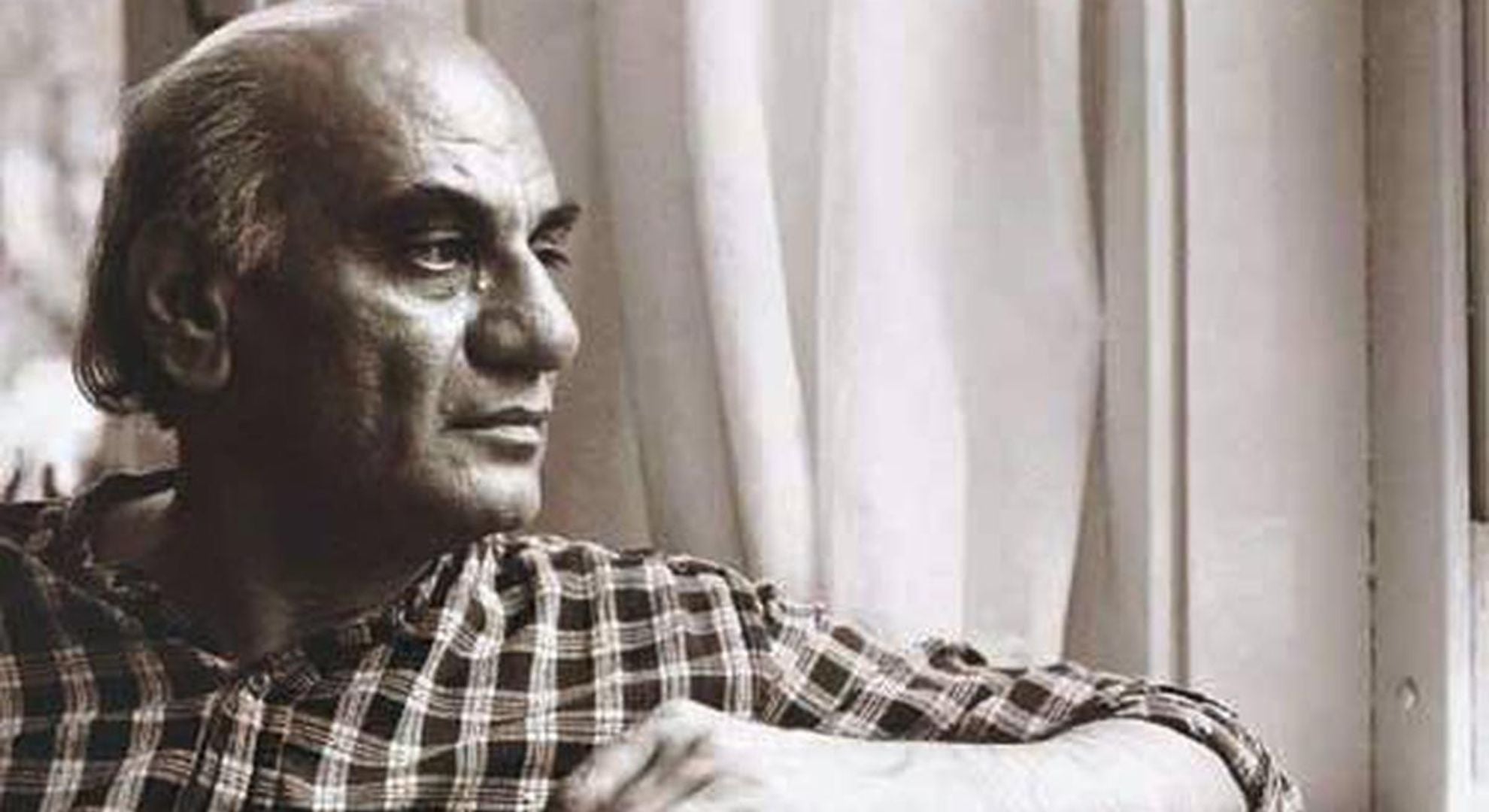
In an industry where momentum often trumps meaning, Mani Kaul chose stillness. His frames lingered until silence became an event, and dialogue arrived not to explain but to hover, like a note in a raga suspended in air. This was cinema as contemplation, unbound by plot, spectacle, or speed.
Born in Jodhpur in 1944, Kaul entered the Film and Television Institute of India in the 1960s, when the country’s parallel cinema movement was gaining strength. Under Ritwik Ghatak’s mentorship, he learned that modern Indian cinema could draw from its own artistic traditions while engaging with the global avant-garde.
Kaul’s debut, Uski Roti (1969), announced his rejection of commercial cinema’s cause-and-effect logic. He treated time as elastic, letting emotion emerge through image and rhythm rather than narrative climax.
For Kaul, cinema was closer to music and painting than theatre. In Duvidha (1973), adapted from a Rajasthani folktale, still photographs, minimal movement, and voiceover evoked the intimacy of oral storytelling, as if the audience was entering a memory.
He was critical of Indian cinema’s disconnection from its visual heritage, arguing that too many filmmakers borrowed Western surface styles while ignoring India’s classical and folk traditions.
His documentaries, such as Dhrupad (1982), refused conventional explanations. The rhythm of the music dictated the rhythm of the film, making the act of listening its own experience.
As a teacher at FTII, Kaul urged students to question every shot and strip cinema to its essence. Many recall how easily he shifted from editing technique to the philosophy of perception. His influence can be seen in Indian independent filmmakers who treat cinema as a language in itself.
Though his work was acclaimed at international festivals and in academic circles, it rarely reached Indian theatres. In the algorithm-driven streaming era, its resistance to instant gratification feels even more radical. Watching a Mani Kaul film today is to enter a different rhythm of seeing and listening, one that reclaims slowness and reanchors art in its cultural soil.
Uski Roti (1969)
Mani Kaul’s debut feature, adapted from Mohan Rakesh’s story (who also wrote the dialogue), won the 1970 Filmfare Critics Award and is a landmark of the Indian New Wave. The film breaks from tradition by using minimal narrative, long static shots, and non-professional actors to focus on the emotional restraint and routine of a rural Punjabi woman, redefining cinematic time and attention.
Ashadh Ka Ek Din (1971)
Kaul's adaptation of Mohan Rakesh’s iconic play transforms theater into cinema by stripping the story to its performative and spatial essentials. The film features pre-recorded dialogue and painterly compositions influenced by Ajanta frescoes. The intellectual and emotional conflict between art and personal desire echoes in the minimal mise-en-scène, while the Himalayan setting and formalist dialogue delivery provide a timeless, introspective feel, integrating both psychological and historical layers.
Duvidha (1973)
An adaptation of Vijaydan Detha's Rajasthani folktale, Duvidha is an avant-garde meditation on female autonomy, identity, and the supernatural. Kaul eschews narrative convention, using saturated imagery, folk music, and sparse dialogue to evoke emotional and cultural ambiguity. The performances, deeply influenced by Bresson, emphasize gesture over psychology. The film's layered use of narration, visual metaphor, and mythic storytelling forms a complex feminist subtext within the feudal context of Rajasthan.
Puppeteers of Rajasthan (1974)
This documentary explores the disappearing tradition of Kathputli (puppetry) in Rajasthan. Kaul captures the daily lives, artistry, and performances of puppeteers, focusing on the oral and craft transmission of their art. Eschewing didactic narration, the film immerses the viewer in the rhythms of rural spectacle, documenting not just the art but the socio-economic challenges faced by these traditional performers. It stands as both ethnographic documentation and aesthetic observation.
A Historical Sketch of Indian Women (1975)
Through a formally restrained style, Kaul traces key shifts in the history of Indian women, examining how their roles are inscribed in classical texts, oral lore, and visual representation. The film foregrounds women's agency and marginalization, employing archival materials and voice-over narration to
Ghashiram Kotwal (1976)
A collaboration with a collective of FTII graduates, this experimental adaptation of Vijay Tendulkar's iconic play merges folk and classical performance elements with nonlinear cinematic technique. The film’s fragmented editing, ensemble staging, and use of Marathi Tamasha tradition create a stylized historical allegory about power, corruption, and resistance during the decline of the Maratha Empire, while also critiquing the politics of performance itself.
Chitrakathi (1977)
This documentary investigates the traditional narrative form of "Chitrakathi"—storytelling with illustrated panels in Maharashtra. Kaul’s camera lingers on storytellers' hands and faces, juxtaposing oral narration with visual imagery to explore memory, performativity, and the transmission of folk tradition threatened by modernity.
Arrival (1980)
A poetic documentary examining the sensory and emotional experience of arrival migrants, pilgrims and travelers. Kaul uses elliptical editing, soundscapes, and ephemeral visuals to meditate on displacement, anticipation, and the changing sense of place in modern India. The film refrains from voice-over, relying on immersive image-sound relationships.
Satah Se Uthata Admi (1980)
A landmark in Indian experimental cinema, this film adapts the poetry of Gajanan Madhav Muktibodh into a cinematic tapestry of images, memories, and shifting subjectivities. Avoiding linear plot, Kaul intercuts fiction and documentary, weaving together fragments of landscape, interior monologue, and surreal imagery to embody the fractured consciousness of the Indian intellectual in the era of political and social upheaval.
Dhrupad (1982)
A seminal exploration of North Indian classical music, this documentary is structured as both a meditation and performance film. Kaul foregrounds the rigor and spirituality of the dhrupad tradition, focusing on the Dagar Brothers. The camera captures sonic textures and the musicians' gestures, using rhythmically edited visuals to draw connections between music, time, and transcendence. The film has become a reference point in ethnomusicology and art cinema.
Mati Manas (1984)
Investigating the craft and cosmology of Indian potters, Kaul's documentary intertwines mythology, oral history, and the tactile process of pottery-making. Visual motifs of earth and handwork are interspersed with mythic voice-over, offering a meditation on continuity, labor, and artistic lineage. The film blurs boundaries between documentary and lyricism, characteristic of Kaul's late style.
Before My Eyes (1989)
This observational documentary explores themes of perception, memory, and mortality through sparse images, stillness, and voice-over. Kaul interacts intimately with people and spaces, focusing less on event than the act of seeing itself—each shot becoming a meditation on presence and temporality.
Siddheshwari (1989)
Blending documentary, fiction, and poetry, this film about singer Siddheshwari Devi is an avant-garde biography, fusing images of Banaras, music, myth, and fragments of memory. Kaul’s elliptical narrative resists chronology, instead mapping a spiritual and artistic journey that merges biography with broader themes of feminine creativity and oral tradition. This film won the National Award and is regarded as a masterwork of Indian nonfiction cinema.
Nazar (1991)
A distinctive adaptation of Dostoevsky’s short story "The Meek One," Kaul transposes the Russian original onto Mumbai, employing languid pacing, spectral camera work, and interior monologue. The narrative is fragmented and emotionally ambiguous, exploring psychological isolation and unstable perception within the city’s milieu. Visual sparseness and elliptical structure make it singular among Dostoevsky adaptations.
Idiot (1992)
Mani Kaul’s daring adaptation of Dostoevsky’s The Idiot transposes the narrative to contemporary Mumbai, where the epileptic Prince Myshkin (Ayub Khan-Din) is misjudged as ‘idiotic,’ alongside Shah Rukh Khan. Conceived as a four-part Doordarshan mini-series, it premiered at the New York Film Festival in 1992 but remained unreleased theatrically. Kaul embraces formal saturation, improvisation, “equipspatial” framing, and fractured temporality to echo Dostoevsky’s literary chaos, emerging as his most radical formalist work.
Naukar Ki Kameez (1999)
Based on Vinod Kumar Shukla's novella, the film examines class and existential ennui through the story of a clerk and his desire for a new shirt. Distilling narrative to its everyday elements, Kaul employs extended takes and deadpan performance to probe the smallness of personal aspiration amid social and bureaucratic inertia—highlighting the subtle violence of routine life and invisibility.
Mani Kaul on Patience and the Self in Cinema, Art and the Upanishads


Comments
Ashmoon — 7 days ago
I’m truly grateful to SEFTYHUB for their professionalism and support during a very difficult time in my relationship. They provided expert guidance and digital investigation assistance that helped me uncover the truth I needed to move forward with clarity and confidence.
Communication was clear, timely, and respectful, and the entire process was handled discreetly. Thanks to their help, I was able to confirm my suspicions and make informed decisions about my future.
If you’re dealing with trust issues or need reliable digital investigative support, I highly recommend
Email—::
SEFTYHUB @GMAIL . COM
TELEGRAM @SEFTYHUB
Julain — 7 days ago
A great hacker is really worthy of good recommendation , SeftyHub
really help to get all the evidence i needed against my husband and
and i was able to confront him with this details from this great hacker
to get an amazing service done with the help ,he is good with what he does and the charges are affordable, I think all I owe him is publicity for a great work done via, SeftyHub@gmail.com#fyp
SEFTYHUB THE SOLUTION — 7 days ago
Hacking into the mobile phone of a cheating spouse. This type of hack helps you track every movement of your cheater as they are bent on helping you gain full remote access into the cheater’s mobile phone using a Trojan breach cracking system to penetrate their social media platforms like Facebook, whats*app, snapchat etc. This spy processing is used via an HDSI folder which synchronizes the target mobile operating system into a clone S-Drive unit. Recovery of lost funds: It saddens our mind when a client expresses annoyance or dissatisfaction of unethical behaviours of scammers. The cyber security technique used to retrieve back the victims stolen funds is the application of a diverse intercall XX breacher software that enables you to track the data location of a scammer. Extracting every information on the con database, every requested information required by the SEFTYHUB would be used to track every transaction, time and location of the scammer using this systematic courier tracking base method.
SEFTYHUB@GMAIL COM
Messi — 7 days ago
Life can be ridiculous at times, and it gets even worse when you have a
cheating spouse. Thanks to a friend who introduced me to a Professional
hacker who assisted me in obtaining all secret files that my husband had
been hiding for several years of our marriage. He assisted in hacking and
gaining access to my cheating husband’s iCloud, social media networks, call
log and spy call recording, monitoring SMS text messages remotely, cell
phone GPS location tracking, spying on What*sApp Messages, Gmail, and kik,
and I discovered he had done me dirty. The hacker is discrete and proactive
in his work very confidential i must say; you can reach him at email💥
SEFTYHUB @GMAIL. COM
Lamin — 7 days ago
I caught my wife cheating on me with my friend. This literally broke my heart when I found out by hiring SEFTYHUB to remotely gain access to my wife’s phone so I could see her text messages and What*sApp messages too.
One fateful morning while my wife was getting ready for work, a text came in on her phone and I saw “hey babe, can’t wait to see you on friday ”.she had my friend’s name saved as another name. Unfortunately, she wasn’t there atm but her phone was locked and I didn’t have access to her phone.
This made me really suspicious because she had told me earlier in the week she was going on a business trip so I knew immediately she was cheating on me . I remember going online immediately to search how to spy on a cheating spouse phone and I somehow landed on a forum where they recommended SEFTYHUB as a private investigator and how he can remotely access device.
In summary, I contacted SEFTYHUB and told him about my situation. Gave him some details about my wife and that was all he needed to gain remote access for me. After 4hours, he gave me access to her Whats*App message and Message/text messages as well. I read all their conversations and how they have even been mocking me in their chat. I printed all their chats for evidence.
Email
SEFTYHUB @GMAIL.COM
Romney — 7 days ago
After countless hours of research and desperate attempts to find a solution, I stumbled upon . It was like finding an oasis in the middle of a desert. Their website promised to help victims of scams reclaim what was rightfully theirs, and I instantly knew I had to give them a shot. Before diving headfirst into the recovery process, I wanted to make sure that SEFTYHUB was the real deal. So, I did my due diligence and looked into their expertise and reputation. To my relief, I found that they had an impeccable track record, successfully assisting countless individuals in recovering their lost funds. Their team consisted of experts in cybersecurity and financial fraud, armed with the knowledge and tools needed to tackle even the most intricate scams. With their reputation preceding them, I felt a renewed sense of hope. SEFTYHUB successfully came to my aid and got back the amount I lost to these scammers and for this, I am sending this article for clarification. The info of SEFTYHUB is email:
Email
SEFTYHUB@GMAIL.COM
TELEGRAM https://t.me/Seftyhub
Antony — 7 days ago
I reached out to SEFTYHUB during one of the most stressful periods of my relationship. I had noticed several things that didn’t make sense, and I was constantly asking myself whether I was imagining everything or whether something was actually wrong.
Instead of immediately confronting my spouse with accusations, I decided to seek professional guidance first. SEFTYHUB helped me understand how to approach the situation carefully and legally, while focusing on evidence and responsible decision-making.
The biggest relief wasn’t simply getting answers — it was finally having a clearer understanding of what steps I could take without making the situation worse.
If you’re struggling with suspected infidelity, remember that emotions can make you rush into decisions you may regret. Take a breath, seek legitimate assistance, and make sure anything you do respects privacy and the law.
SEFTYHUB — clarity before confrontation.
Email 👇👇
Seftyhub@gmail. comTELEGRAM @SEFTYHUB
Terry — 7 days ago
I honestly didn’t know what to do anymore. I had been noticing changes in my spouse’s behavior for months, but every time I asked questions, I was left feeling confused and doubtful of myself. I reached out to SEFTYHUB because I needed clarity, not more guessing. What impressed me most was the way they handled my situation professionally. They listened to my concerns, explained what could and could not be done, and helped me approach the situation responsibly. I finally had enough information to have an honest conversation instead of constantly living with suspicion.
SEFTYHUB gave me something I desperately needed clarity. If you’re dealing with doubts about your relationship, don’t let fear and assumptions consume you. Seek legitimate help and make informed decisions.”
SEFTYHUB @GMAIL COM
WHATS APP +1 9297752133