
Suswara Lakshmi : How M.S. Subbulakshmi became a national icon
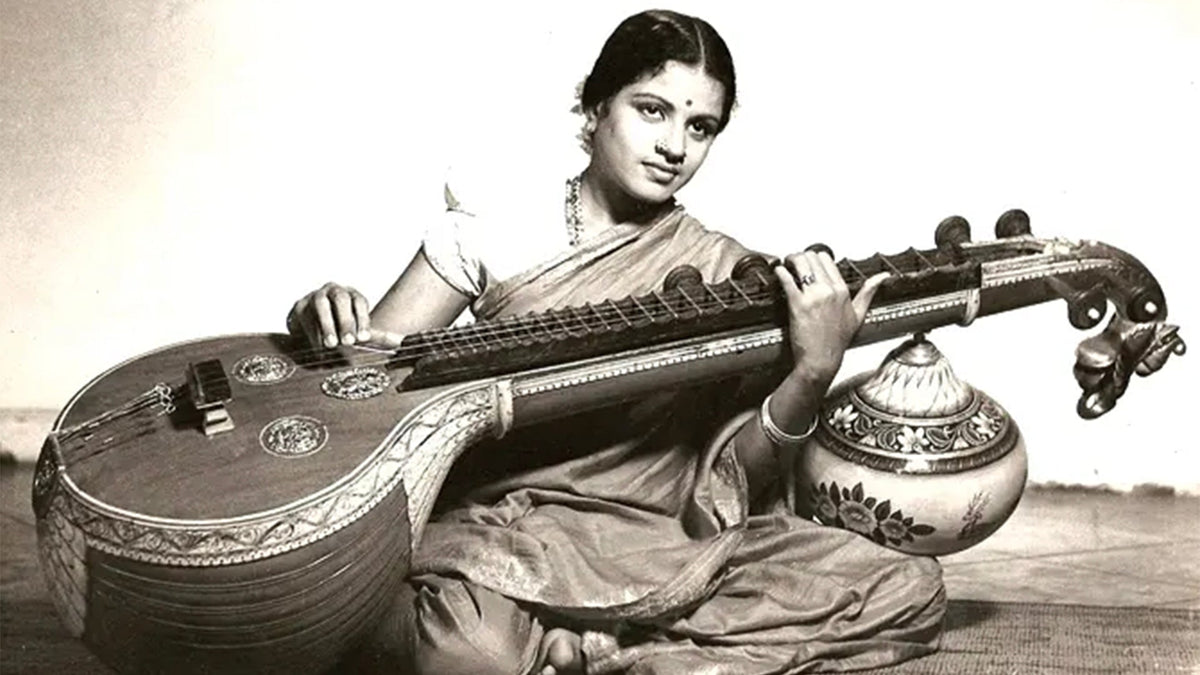
Today, the 16th of September, is M.S. Subbulakshmi’s 110th birthday.
In Tamil Nadu, she was MS Amma. At home, as a child in Madurai, she was Kanjumma. Her mother, Shanmukhavadivu Ammal, played the veena and taught her to sing. Her grandmother Akkammal played the violin. She cut her first record at ten years old, praising the goddess Meenakshi of Madurai. She then studied under Semmangudi Srinivasa Iyer and Musiri Subramania Iyer.
She went on to sing in Tamil, Telugu, Kannada, Sanskrit and Hindi, and recorded in English and Japanese. A Tyagaraja kriti and a Meera bhajan came from the same voice without either sounding borrowed.
In the 1945 Tamil film Meera, she played Mirabai, the 16th-century saint-poet from Rajasthan, and the film ran for weeks in Madras. When it released in Hindi in 1947, she played Meera again, a Carnatic singer from Madurai now singing a Rajasthani saint’s poetry to a Hindi-speaking audience.
At Mumbai’s Vikramaditya Festival in 1943, she had already performed Carnatic music alongside bhajans by Mirabai, Tulsidas and Guru Nanak. Ustad Bade Ghulam Ali Khan heard her that night and called her “Suswara Lakshmi.” Her husband, T. Sadasivam, a former freedom fighter turned publisher, was already steering her career past Tamil Nadu’s stages and towards the rest of India.
In 1966, she became the first Indian musician to perform at the United Nations General Assembly, singing “Maitreem Bhajata,” a Sanskrit hymn for peace among nations. In 1974, she received the Ramon Magsaysay Award for Public Service, the first Indian musician to win it.
In 1998, she received the Bharat Ratna, becoming the first musician on a list that until then had gone almost entirely to presidents, prime ministers and scientists. Her concerts by then had funded temples, hospitals and famine relief, over 200 of them given for charity, with royalties from her records handed to causes she believed in.
Her recording of the Venkateswara Suprabhatam, cut for HMV in 1963, became the best-selling non-film record in Indian history. Six decades on, it still plays at dawn in homes and temples across South India, the same voice waking the day it always did.


Comments