
Auteur: How Amol Palekar's Second Act changed Indian Cinema
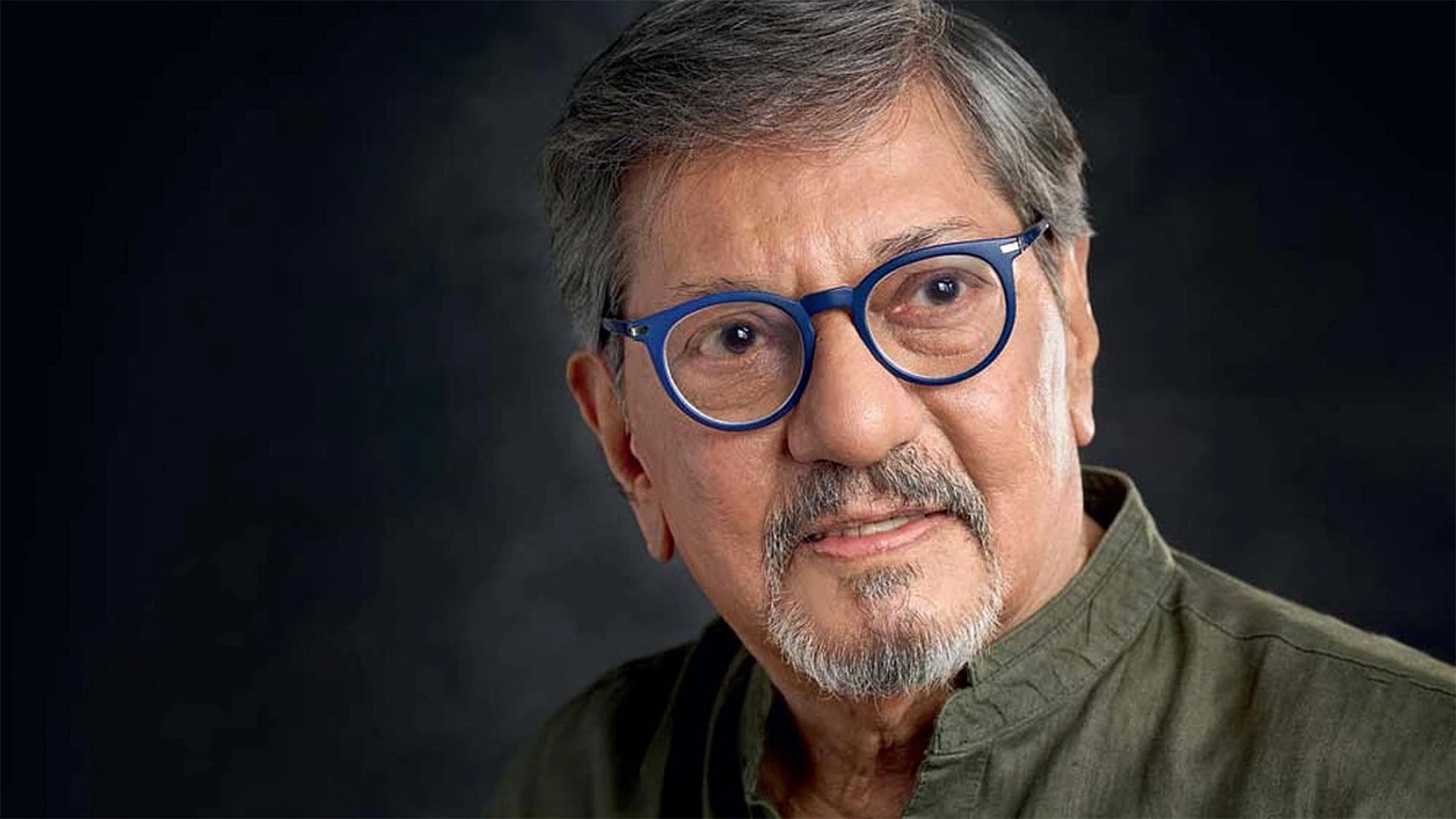
For generations of Indian audiences, Amol Palekar has remained the face of the ordinary man. Through films like Rajnigandha, Chhoti Si Baat, Gol Maal and Baton Baton Mein, he brought warmth, restraint and quiet humour to Hindi cinema at a time when larger-than-life heroes dominated the screen. While these performances made him one of India’s most loved actors, they tell only part of his story.
Long before cinema entered his life, Palekar trained as a painter at the Sir J.J. School of Art and immersed himself in Mumbai’s experimental theatre movement under Satyadev Dubey. In his autobiography, Viewfinder: A Memoir, he describes himself as “a painter by nature, an actor by accident and a director by choice.” That single line captures the journey of an artist whose creative ambitions always stretched beyond acting.
By the mid-1980s, Palekar gradually stepped away from a successful acting career to focus on filmmaking. It was an uncommon decision for a star at the height of his popularity. Rather than chasing commercial success, he chose stories rooted in literature, folklore and lived experience.
His films, including Ankahee, Bangarwadi, Daayraa, Quest and Paheli, explored identity, gender, memory and rural life with remarkable empathy. They invited audiences to engage with complex emotions without relying on spectacle, establishing Palekar as one of Indian cinema’s most thoughtful filmmakers.
The recognition that followed matched the strength of his work. While Gol Maal earned him the Filmfare Award for Best Actor, his directorial films received multiple National Film Awards. Bangarwadi, Daayraa, and Quest were all honoured nationally, while Paheli became India’s official submission to the Academy Awards.
Viewfinder makes it clear that Palekar never truly reinvented himself. The painter, actor and filmmaker were always driven by the same instinct: to observe people with honesty and compassion. By leaving the comfort of stardom to pursue authorship, Amol Palekar created a body of work that continues to enrich Indian cinema from both sides of the camera.


Comments
Online Pharmacy & Medical Store — 9 hours ago
ApollonPharma is the best online pharmacy that delivers genuine medicines to your doorstep. You can buy your medications and health care products online and quickly get it delivered to you from a licensed pharmacy. We have an experienced team of experts and specialists to help make your medication shopping experience better. At Supportive ApollonPharma, patients can buy Medication online through secure medication-delivery systems and telehealth-based.
Buy Adderall Online
Buy Alprazolam Online
Buy Clonazepam Online
Buy Codeine Online
Buy Oxycontin Online
Buy Tramadol Online
Text: +1(785) 289-8283
Message: info@apollonpharma.com
Website Link: https://apollonpharma.com/
Beverly Garcia — 13 days ago
There was a time when I thought my marriage would end in silence and regret. The distance between us kept growing, and every attempt to fix things only led to more arguments. I felt emotionally drained and ready to give up. Finding Dr. Alaska became a turning point for me. Instead of judgment, I received understanding. Instead of fear, I found hope. Through his guidance and reassurance, the atmosphere in my home gradually improved. My partner reached out, our conversations became calm and meaningful again, and the love we once shared began to grow stronger. Today, we are not just back together we are stronger, wiser, and more connected than before. I am deeply thankful for this second chance and the peace that has been restored in my marriage. Email: alaskaspellcaster44@gmail.com. WhatsApp him +233 59 274 5728
musette chastian —
HIRE BEST AI HACKER RECOVERY CRYPTOCURRENCY / BANK ACCT RECOVERY EXPERT OPTIMUM HACKER RECOVERY
I want to say a big thank to Wizard Hackers Recovery highly skilled professionals with backgrounds in cybersecurity, blockchain technology, softwares and law enforcement
I am aware that there were a lot of potential outcomes for the recent online investment and scams. When I bought a phony binary option and lost $270,000 in Bitcoin, I was in your position. However, with Wizard Hacker Recovery Pro’s assistance, I was able to recover my money. They helped me get my stolen Bitcoin back. Although they were recommended to me by a buddy whom I highly trust, at first I didn’t trust them. I was able to receive my refund in days . For your use, Wizard Hacker Recovery Pro has provided their contact information below
( TELEGRAM : @wizardhackersrecovery )
( +447347223720/ + 1-256-256-8636 for WhatsApp )
The
Thank me later
Becca Wood —
I’m wishing good fortune to everyone who comes across this comment! I went bankrupt last year due to failed business ideas. I used to enjoy playing the lottery for fun but as my situation worsened financially I sought help to win big this time and found a man called MEDUZA, who has assisted numerous individuals worldwide with their financial issues. This man prepared a powerful spell for me that enabled him to get the secrete lucky numbers for me I played the game with the numbers and to my astonishment I discovered that I had won $259 million Jackpot after 2 weeks just has he said; Today, I’m now free of debt and I own different investments globally. Without Meduza I wouldn’t have made it through the tough times I experienced last year. Truly, MEDUZA is a divine presence among us. If you are currently struggling in aspect of your life reach out to MEDUZA through the below information.
Whats-App: +1 (807) 798-3042
Email: lordmeduzatemple@hotmail.com
Website: lordmeduzaspelltemple.com
Richard Kee Jr —
I wish the best of luck to everyone reading this comment! Last year, I filed for bankruptcy after several business failures. I used to play the lottery just for fun, but as my financial situation worsened, I sought help to win a major prize; that was when I found a man named Priest Alaska, who has helped countless people around the world with their financial troubles. He cast a powerful spell for me that revealed secret lucky numbers. I played those numbers and, to my surprise, discovered I had won the $209.3 million Powerball jackpot after just 7 months and 14 days exactly as he had predicted. Today, I am debt-free and have various investments around the world. Without Priest Alaska, I would not have overcome the hardships I faced last year. Priest Alaska is truly a divine presence among us. If you are currently facing difficulties in any aspect of your life, contact Priest Alaska using the information below.
You can contact him via email: alaskaspellcaster44@gmail.com
Visit his website for more information: https://dralaskaspellcaster.mystrikingly.com
Billy Hansell —
Winning a multi million dollar lotto is a life changing event for almost any winner. My name is Billy Hansell from Chicopee, Massachusetts, and I would like to take this opportunity to tell you how I became the famous winner of the $758 million (£591 million) Powerball jackpot. I know many people wonder how I secured this lottery win. Would you believe me if I told you I did it with the help of a spell? I met a famous spell caster named Priest Alaska, and he was the one who made it happen for me. As surprising as it was even to me my famous comment to the press was, “I’m going to go crawl into bed now” I never imagined that Priest Alaska would make me rich overnight. If you, too, want to seize the chance to win big and achieve great wealth just as I did then contact Priest Alaska via email at alaskaspellcaster44@gmail.com or learn more about Priest Alaska on his website: https://dralaskaspellcaster.mystrikingly.com Fortune will smile upon you, too. Thanks for reading I hope to see you at the top.
Billy Hansell —
Winning a multi million dollar lotto is a life changing event for almost any winner. My name is Billy Hansell from Chicopee, Massachusetts, and I would like to take this opportunity to tell you how I became the famous winner of the $758 million (£591 million) Powerball jackpot. I know many people wonder how I secured this lottery win. Would you believe me if I told you I did it with the help of a spell? I met a famous spell caster named Priest Alaska, and he was the one who made it happen for me. As surprising as it was even to me my famous comment to the press was, “I’m going to go crawl into bed now” I never imagined that Priest Alaska would make me rich overnight. If you, too, want to seize the chance to win big and achieve great wealth just as I did then contact Priest Alaska via email at alaskaspellcaster44@gmail.com or learn more about Priest Alaska on his website: https://dralaskaspellcaster.mystrikingly.com Fortune will smile upon you, too. Thanks for reading I hope to see you at the top.
Geo Gomez —
HOW I RECOVER $690,000 FROM FAKE INVESTMENT BROKER ONLINE
A few months ago, I found myself in a precarious situation when I fell victim to a deceptive trading platform. During my research on how to get my funds back, I came across WIZARD GEO COORDINATES RECOVERY through Google and YouTube. What caught my attention was that they said they would not require any upfront payment before providing their recovery service. I decided to contact them to discuss my case and understand their process. WIZARD GEO COORDINATES RECOVERY offers professional services in cybersecurity and digital recovery for individuals and businesses. I am deeply grateful for their support. If you have fallen victim to a Bitcoin scam or any other form of cryptocurrency fraud, don’t give up. Reach out to WIZARD GEO COORDINATES RECOVERY Contact:
Email: geovcoordinateshacker@gmail.com
Website; https://geovcoordinateshac.wixsite.com/geo-coordinates-hack
Telegram @Geocoordinateshacker
I was genuinely impressed by the professionalism and expertise and i consider myself incredibly fortunate to have reached out to them