
Bengal Bass: How Bengal's box competitions put Dek Bass on the world map
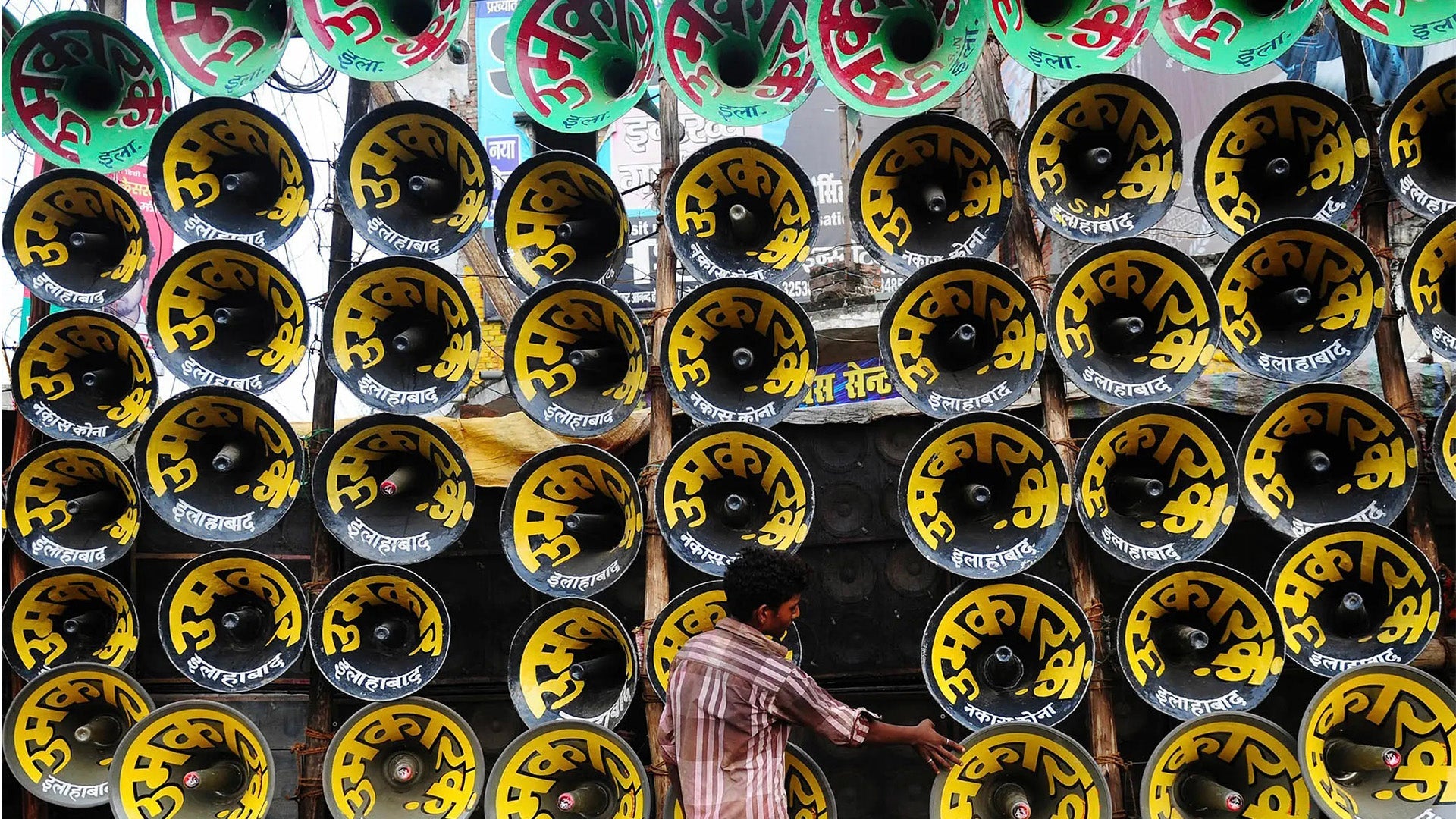
Videos have been circulating online for a few years now, grainy and vertical, shot on phones at rural gatherings somewhere in West Bengal. A man adjusts something on a cassette deck with a screwdriver. The bass drops and the crowd surges forward. Most people who stumbled on these had no frame of reference. They just knew it looked unlike anything they had seen before. That sound has a name: Dek Bass.
Box competitions are at the heart of it. Two hand-built setups, cassette decks connected to stacked bass woofers known as the box, face each other across village streets and open fields while crowds of men pack in between. Three decks run simultaneously, out of sync, layering tracks into a wall of sirens, film dialogue, and sub-bass so physical it registers in the chest before the ears. The systems are kept running mid-set through jugaad, makeshift fixes invented on the spot. A winner is determined by a water bottle placed on a wooden plank between both rigs. Whichever side it falls toward loses, because the opposition’s bass was stronger. No judges, no panel, just physics.
In 2008, a young man in Shantipur named Khobir got a copy of FL Studio from a friend. He had no knowledge of bass culture outside Bengal, no Jamaican lineage, nothing borrowed from anywhere. He built PA systems by hand, sold cassettes alongside them, and competed, pushing stacks past their limits each time. “Idhar attack,” he once said, pointing to his chest.
Filmmaker Rana Ghose spent five years finding Khobir, eventually self-financing the trip to his village to make ‘Bass Boss’, a documentary that puts viewers inside the competition culture, the DIY engineering, and the community that sustains it. Backed by Ninja Tune founder Matt Black, it has screened across three continents.
Kolkata-born and London-based producer/DJ Pablo Dutta has taken the influence further, weaving Dek Bass’s sub-bass construction and asynchronous layering into club tracks that now move through London’s underground circuit, showing producers in both cities a different way to think about low-end innovative sound design.



Comments
Lydia Smith — 1 day ago
HIRE A HACKER YOUR STOLEN CRYPTO RECOVERY / BTC / USDT / ETH WITH THE HELP OF CAPITAL CRYPTO RECOVER.
I want to share my experience publicly regarding cryptocurrency wallet recovery, I highly recommend you to contact CAPITAL CRYPTO RECOVER, a professional private investigator in the Bitcoin world. They have a certified expert security team specializing in Bitcoin Recovery Services and have helped many people worldwide recover their lost funds. My wife and I were defrauded by an online manipulator posing as an experienced crypto investment professional. We lost $9.2 Million Stolen BTC in cryptocurrency and were left feeling homeless. After spending hours searching for a reliable crypto recovery service, I discovered CAPITAL CRYPTO RECOVER online. By patiently explaining my situation to their team, I was able to recover all my funds. Remarkably, my money was returned to my wallet in less than 24 hours. I am extremely grateful to CAPITAL CRYPTO RECOVER for their excellent assistance—they truly were a godsend in my difficult situation. If you have fallen victim to a cryptocurrency scam, you can reach CAPITAL CRYPTO RECOVER through the following channels Email: Recoverycapital@fastservice.com OR Call/WhatsApp: +1 (336) 390-6684 Contact: Capitalcryptorecover@zohomail.com Website: https://recovercapital.wixsite.com/capital-crypto-rec-1
Susan Joel — 2 days ago
Herpes is a serious and recurring disease which can’t be cured through drugs or injections by the American doctors but the best way to deal with herpes is by taking natural herbal medicine for it, and is only few American doctors that know about this herbal medicine, from Dr Uma.. I have read about Dr Uma the great herbalist doctor from African who can cure Herpes with his herbal medicine. for the people suffering from the following diseases Hiv, Herpes, Cancer, Herpatitis B, Diabetes, Hpv, Infections ETC should contact him for his herbal medicine because i am a living testimony and i was cured of HERPES. Although, i sent him what he requested and he sent me his medicine which i took for three weeks and when i went for test i was tested Herpes Negative. you can reach him through his email address:Dr.umaherbalcenter@gmail.com or Whatsapp +2347035619585 Thanks Dr Uma.
Russo Ferrari —
Priest Alaska is a GOD on Earth, His lottery spells are 100% active, He is real and can perform miracles with his spell. I am overwhelmed because I just won $10MILLION DOLLARS from a lottery jackpot game with the lottery number he gave me after casting his lottery spell. I contacted Priest Alaska for help to win a lottery via Email: alaskaspellcaster44@gmail.com he told me that a spell was required to be casted so that he can reveal my winning numbers, I provided his requirements to casting the spell and after casting the spell he gave me 6 lottery numbers and I played and won $10MILLION DOLLARS. How can I thank this man enough? His spell is real and he is like a God on Earth. Thank you for changing my life with your lottery winning numbers. Do you need help to win a lottery too? contact Priest Alaska Check out his website for more information: https://dralaskaspellcaster.mystrikingly.com
Savage —
herpes is a serious and recurring disease which can’t be cured through drugs or injections by the American doctors but the best way to deal with herpes is by taking natural herbs medicine for it and is only few American doctors that know about this herbal medicine from Dr Osemuhau .. I have read about Dr Osemuhau the great herbalist doctor from African who can cure disease with his powerful herbal medicine. for the people suffering from the following diseases, Herpes, Cancer, Also,Herpatitis, Diabetes, Hps,Infections ETC should contact him for his herbal medicine because i am a living testimony and i was cured of herpes. Although, i sent him what he requested and he sent me his medicine which i took for 1 weeks and today when i went for test i was tested herpes negative. you can reach him through his email Drosemuhau@gmail.com or
WhatsApp +2348168714427 Facebook page https://www.facebook.com/share/1Fn4oahcfG/?
he will help you out
musette chastian —
HIRE BEST AI HACKER RECOVERY CRYPTOCURRENCY / BANK ACCT RECOVERY EXPERT OPTIMUM HACKER RECOVERY
I want to say a big thank to Wizard Hackers Recovery highly skilled professionals with backgrounds in cybersecurity, blockchain technology, softwares and law enforcement
I am aware that there were a lot of potential outcomes for the recent online investment and scams. When I bought a phony binary option and lost $270,000 in Bitcoin, I was in your position. However, with Wizard Hacker Recovery Pro’s assistance, I was able to recover my money. They helped me get my stolen Bitcoin back. Although they were recommended to me by a buddy whom I highly trust, at first I didn’t trust them. I was able to receive my refund in days . For your use, Wizard Hacker Recovery Pro has provided their contact information below
( TELEGRAM : @wizardhackersrecovery )
( +447347223720/ + 1-256-256-8636 for WhatsApp )
The
Thank me later
Becca Wood —
I’m wishing good fortune to everyone who comes across this comment! I went bankrupt last year due to failed business ideas. I used to enjoy playing the lottery for fun but as my situation worsened financially I sought help to win big this time and found a man called MEDUZA, who has assisted numerous individuals worldwide with their financial issues. This man prepared a powerful spell for me that enabled him to get the secrete lucky numbers for me I played the game with the numbers and to my astonishment I discovered that I had won $259 million Jackpot after 2 weeks just has he said; Today, I’m now free of debt and I own different investments globally. Without Meduza I wouldn’t have made it through the tough times I experienced last year. Truly, MEDUZA is a divine presence among us. If you are currently struggling in aspect of your life reach out to MEDUZA through the below information.
Whats-App: +1 (807) 798-3042
Email: lordmeduzatemple@hotmail.com
Website: lordmeduzaspelltemple.com
Claris Awa —
It’s so unbelievable how wonderful herbs Natural healing can be. Suffering from herpes is a terrible experience which I suffered until I met herbalist Dr. Kham. I tried all possible means to get cured but I never received a cure from any of the 7 hospitals I visited. Just March/21/2026 I saw a recent post of how Herbalist Dr. Kham herbal medicine cured people and that he is a honest man to work with in the procedures on finding a cure, then i contacted him in trial and he sent me a herbal medicine with the full prescription oh how to drink for two weeks and i exactly followed the guidelines that was given to me by Dr Kham to cut the long story short the herbal medicine flushed out the herpes from my body and make the herpes virus inactive in my nervous system, All thanks to Dr Kham who God is using to cure people of this terrible virus (herpes simplex virus) for anyone here that has herpes or other kinds of disease and Virus should mail all his or her complain to Dr Kham Remedies on WhatsApp +2348159922297 and Herbal treatment is 100% guaranteed for Herpes Virus. Dr Kham Email address is dr.khamcaregiver@gmail.com or You can get in touch with him on his website via herbalistdrkhamcaregiver.simdif.com
Geo Gomez —
HOW I RECOVER $690,000 FROM FAKE INVESTMENT BROKER ONLINE
A few months ago, I found myself in a precarious situation when I fell victim to a deceptive trading platform. During my research on how to get my funds back, I came across WIZARD GEO COORDINATES RECOVERY through Google and YouTube. What caught my attention was that they said they would not require any upfront payment before providing their recovery service. I decided to contact them to discuss my case and understand their process. WIZARD GEO COORDINATES RECOVERY offers professional services in cybersecurity and digital recovery for individuals and businesses. I am deeply grateful for their support. If you have fallen victim to a Bitcoin scam or any other form of cryptocurrency fraud, don’t give up. Reach out to WIZARD GEO COORDINATES RECOVERY Contact:
Email: geovcoordinateshacker@gmail.com
Website; https://geovcoordinateshac.wixsite.com/geo-coordinates-hack
Telegram @Geocoordinateshacker
I was genuinely impressed by the professionalism and expertise and i consider myself incredibly fortunate to have reached out to them