
Qawwali: How Manjari Chaturvedi's book is a breathtaking look at an enigmatic art form
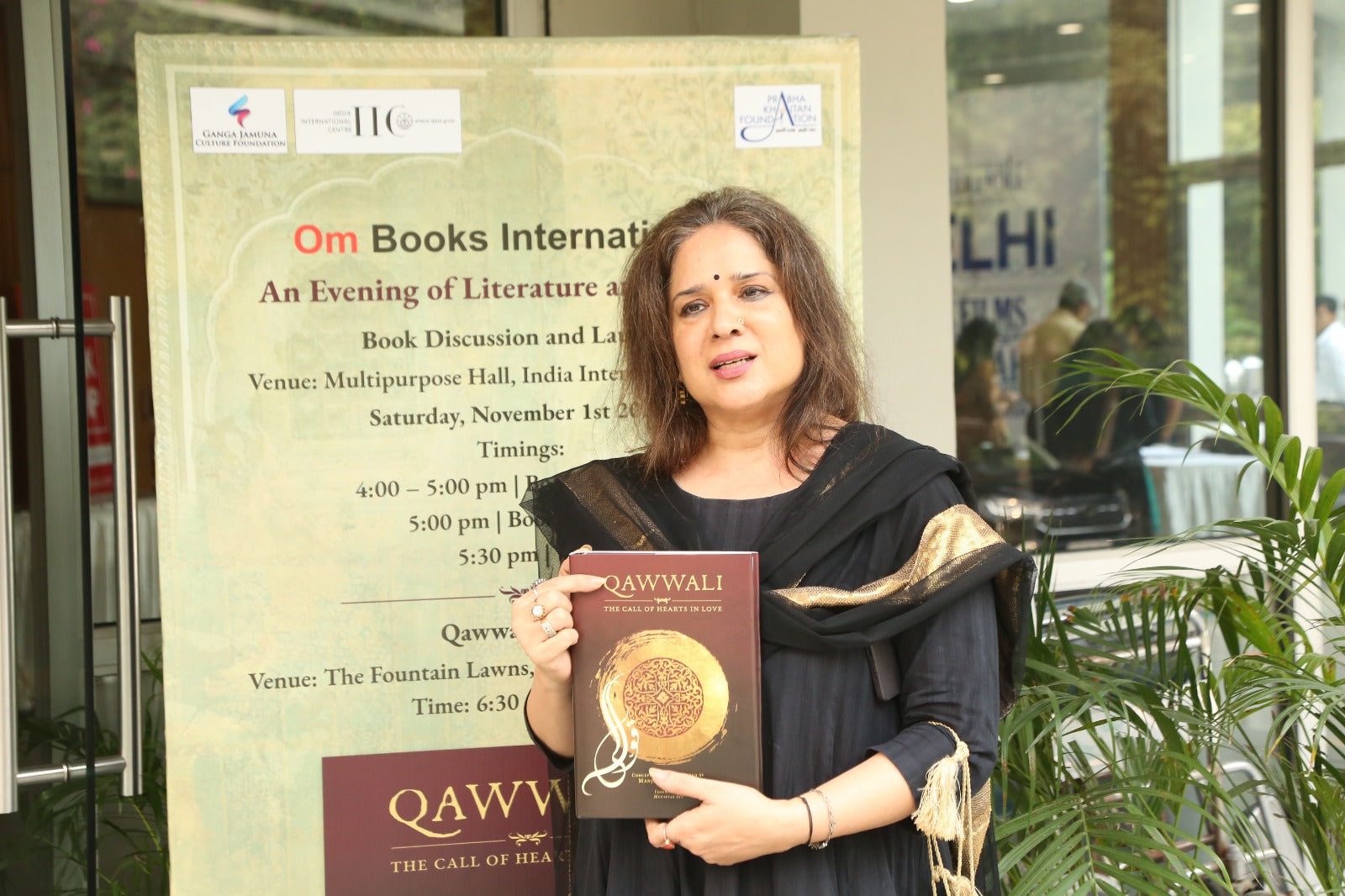
QAWWALI: The Call of Hearts in Love makes a rare promise and backs it up: it presents itself as the first in-depth book on qawwali in India, shaped by years of work inside the world it documents.
Conceptualised, compiled, and edited by Manjari Chaturvedi, the volume grows out of her long-running documentation under The Qawwali Project (started in 2011). She has built public entry points into the form through seven editions of the Understanding Qawwali seminar series and eight years of The Qawwali Photo Project, treating qawwali as a living tradition with lineage, structure, language, and community.
If you’ve ever looped a favourite chorus, lost yourself in “Damadam Mast Qalandar,” or assumed qawwali begins and ends with Urdu and Arabic, this book nudges you further. It asks where qawwali took the shape we recognise today, why a mehfil is structured the way it is, and how devices like repetition and poetic progression create that shared rush people describe as ecstasy. It also asks what we lose when we reduce qawwali to entertainment instead of a 700-year-old cultural practice tied to shrines, saints, and the ethics of listening.
The method is on point. Alongside 17 scholarly essays, the book includes 10 thematic photo essays that bring qawwals and their spaces into view with unusual intimacy. It holds verified historical evidence and oral narratives in the same frame, without pretending one cancels the other.
The scope is wide: languages and dialects, traditions and gharanas, sama and its defence, identity and gender, diasporic journeys, and the pressures modern technology puts on artistic agency. Qawwals emerge here as custodians of an inherited repertoire, negotiating survival, devotion, and performance in real time.
A final touch: a QR-code bookmark links to curated qawwali playlists on Spotify, Apple Music, and YouTube, so you can read with your ears switched on.


Comments
💞เว็บสล็อตแตกดี13/10/2026💞 — 1 day ago
https://x.com/NP5230322012050/status/2057335681912107161
https://schoolido.lu/user/atchon168/
https://www.twosapp.com/6a0ea63927ebc42d985f2362
https://multy.me/McM7l
https://tooter.in/Piyapol168/posts/116611213752042169
https://mastodon.social/@Pawich168/116611238795168728
💞เว็บสล็อตแตกดี13/10/2026💞 — 1 day ago
https://x.com/NP5230322012050/status/2057335681912107161
https://schoolido.lu/user/atchon168/
https://www.twosapp.com/6a0ea63927ebc42d985f2362
https://multy.me/McM7l
https://tooter.in/Piyapol168/posts/116611213752042169
https://mastodon.social/@Pawich168/116611238795168728
💞เว็บสล็อตแตกดี13/10/2026💞 — 1 day ago
https://x.com/NP5230322012050/status/2057335681912107161
https://schoolido.lu/user/atchon168/
https://www.twosapp.com/6a0ea63927ebc42d985f2362
https://multy.me/McM7l
https://tooter.in/Piyapol168/posts/116611213752042169
https://mastodon.social/@Pawich168/116611238795168728
💞เว็บสล็อตแตกดี11/10/2026💞 — 3 days ago
https://x.com/NP5230322012050/status/2057335681912107161
https://schoolido.lu/user/atchon168/
https://www.twosapp.com/6a0ea63927ebc42d985f2362
https://multy.me/McM7l
https://tooter.in/Piyapol168/posts/116611213752042169
https://mastodon.social/@Pawich168/116611238795168728
💞เว็บสล็อตแตกดี11/10/2026💞 — 3 days ago
https://x.com/NP5230322012050/status/2057335681912107161
https://schoolido.lu/user/atchon168/
https://www.twosapp.com/6a0ea63927ebc42d985f2362
https://multy.me/McM7l
https://tooter.in/Piyapol168/posts/116611213752042169
https://mastodon.social/@Pawich168/116611238795168728
💞เว็บสล็อตแตกดี11/10/2026💞 — 3 days ago
https://x.com/NP5230322012050/status/2057335681912107161
https://schoolido.lu/user/atchon168/
https://www.twosapp.com/6a0ea63927ebc42d985f2362
https://multy.me/McM7l
https://tooter.in/Piyapol168/posts/116611213752042169
https://mastodon.social/@Pawich168/116611238795168728
💞เว็บสล็อตแตกดี11/10/2026💞 — 3 days ago
https://x.com/NP5230322012050/status/2057335681912107161
https://schoolido.lu/user/atchon168/
https://www.twosapp.com/6a0ea63927ebc42d985f2362
https://multy.me/McM7l
https://tooter.in/Piyapol168/posts/116611213752042169
https://mastodon.social/@Pawich168/116611238795168728
🎰สล็อตแตกดี💥pgslotdiamond168 🎰9/10/2026 — 5 days ago
https://x.com/NP5230322012050/status/2064220369654100395?s=20
https://bsky.app/profile/thanabodee02.bsky.social/post/3mntid6h3qk26
https://Thanabodee168.raindrop.page/newza-71770360
https://mastodon.social/@Thanabodee168/116718568253187130
https://tooter.in/Thanabodee168/posts/116718584186458737
https://multy.me/yqZaP