
Revival: How Naya Beat gave lost South Asian music a second life
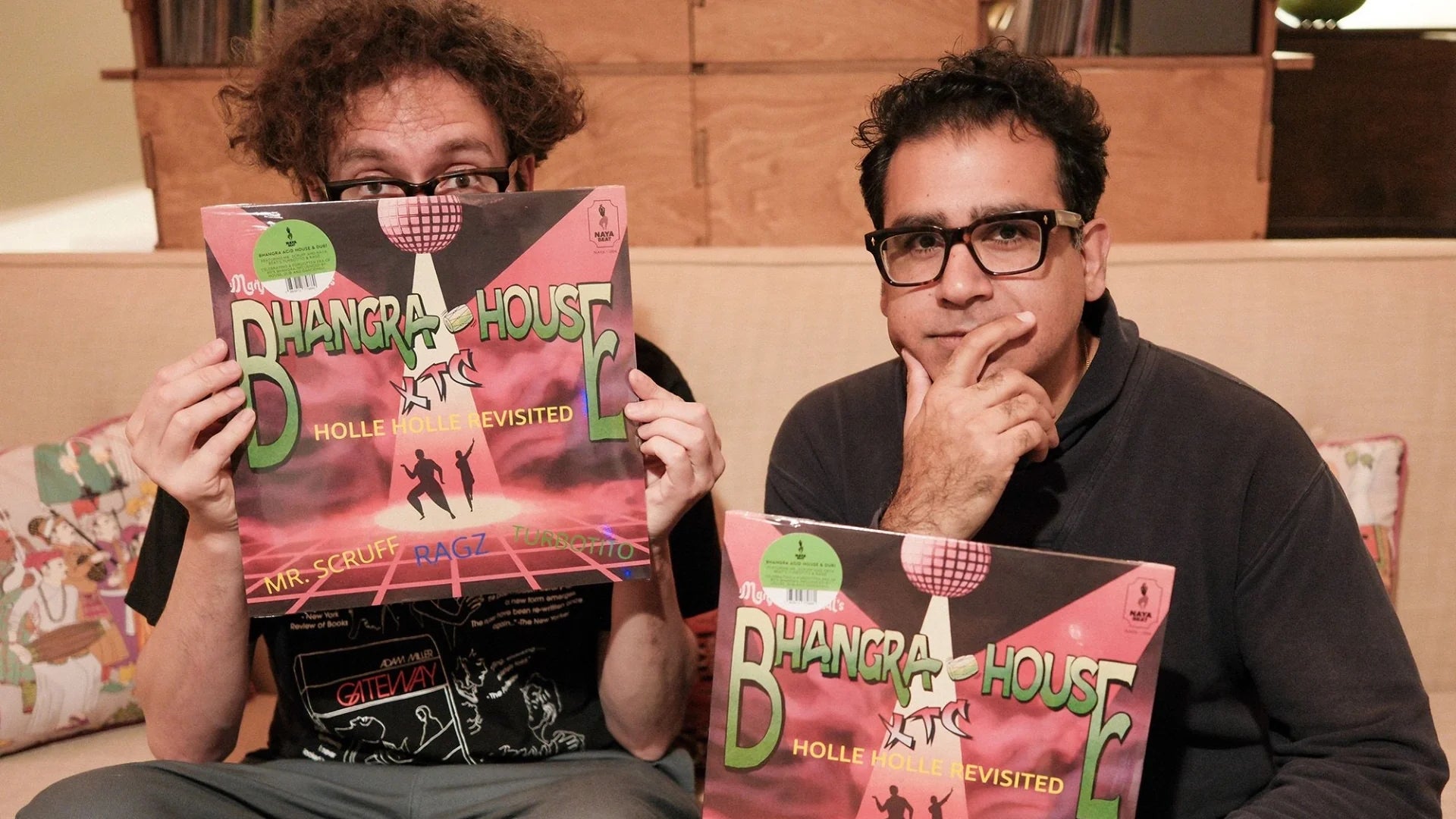
At a famed Los Angeles underground dance party, two DJs and record collectors traded stories about the strangest South Asian records they knew. Not the famous film songs, but the ones that slipped through the cracks. Pressed in small numbers, passed between families, buried in dusty shops and forgotten crates. By the end of the night, they realised they were chasing the same ghosts.
That realisation became Naya Beat.
Founded by Raghav Mani and Filip Nikolic, the label began as a mixtape. It soon turned serious. Raghav had a personal connection with Indian music through his Delhi-rooted parents. Filip came from outside, pulled in by Remo Fernandes’ “Jungle Days”, an oddball Goan synth-pop track that opened Indian music up for him. What they found was not a footnote. It was a missing lane of South Asian dance music.
Take Punjabi Disco. In 1982, Mohinder Kaur Bhamra and her son Kuljit went into a London studio with a Roland SH-1000 synth, a CR-8000 drum machine and an impossible idea: Punjabi vocals over electronic dance music. Scarcely pressed, poorly distributed, lost for forty years. When Naya Beat brought it back in 2025, it did not feel like nostalgia. It felt like proof the future had been sitting in a box all along.
The thread runs through Pinky Ann Rihal’s Tere Liye, Manjeet Kondal and Deepak Khazanchi’s bhangra-house experiments, and renewed work around Asha Puthli. These artists moved through disco, boogie, synth-pop, house, dub and street soul before most South Asians knew those sounds.
The world has caught up. Naya Beat Volume 1 was The Vinyl Factory’s number one reissue of 2021. Volume 2 topped the same list in 2024. Punjabi Disco was a Pitchfork Best New Reissue and among The Guardian’s ten best global albums of 2025. Gilles Peterson, Peggy Gou and Solomun championed it; Resident Advisor and Mixmag have followed suit.
Now, Raghav and Filip are working on an original album for next year, proof Naya Beat is not simply archival. For decades, these artists were treated as regional curiosities. Naya Beat hears them differently. The work is archival, yes, but also restoration: returning artists to the history they helped shape.



Comments
Riley Olivia — 22 hours ago
I and my husband have been married for 22 years and for quite a long time now we have been living as strangers due to some marital issues and his inability to stand out to make things right. Unknown to me, there was some other lady in the picture who has been so daring and doing everything possible to ruin my marriage so she can fully take my place. i sought for help within my reach and nothing worked so i had to contact Dr osazuwa spell caster who inturn was so helpful and showed me how swift he tends to resolve marital issues for couples. He revealed to me all that happened between my husband and the said and he did everything possible with his powers and got them separated. My husband is fully back home to me and our girls and it gladdens my heart so much. Dr osazuwa spell caster is trustworthy enough to deliver whenever you call on him for his help to fix your problems.
CONTACT SPIRITUAL HIGH CHIF PAPA OSAZUWA FOR HELP TO SOLVE YOUR RELATIONSHIP OR MARRIAGE ISSUES
via WhatsApp : +2347031497107
Email: drosazuwaspell@gmail.com
Lydia Smith — 1 day ago
HIRE A HACKER YOUR STOLEN CRYPTO RECOVERY / BTC / USDT / ETH WITH THE HELP OF CAPITAL CRYPTO RECOVER.
I want to share my experience publicly regarding cryptocurrency wallet recovery, I highly recommend you to contact CAPITAL CRYPTO RECOVER, a professional private investigator in the Bitcoin world. They have a certified expert security team specializing in Bitcoin Recovery Services and have helped many people worldwide recover their lost funds. My wife and I were defrauded by an online manipulator posing as an experienced crypto investment professional. We lost $9.2 Million Stolen BTC in cryptocurrency and were left feeling homeless. After spending hours searching for a reliable crypto recovery service, I discovered CAPITAL CRYPTO RECOVER online. By patiently explaining my situation to their team, I was able to recover all my funds. Remarkably, my money was returned to my wallet in less than 24 hours. I am extremely grateful to CAPITAL CRYPTO RECOVER for their excellent assistance—they truly were a godsend in my difficult situation. If you have fallen victim to a cryptocurrency scam, you can reach CAPITAL CRYPTO RECOVER through the following channels Email: Recoverycapital@fastservice.com OR Call/WhatsApp: +1 (336) 390-6684 Contact: Capitalcryptorecover@zohomail.com Website: https://recovercapital.wixsite.com/capital-crypto-rec-1
Daniel Tyree —
THE BEST SECRET WAY TO WIN THE LOTTERY.
I was researching how to improve my odds of winning the lottery when I came across numerous testimonials on a blog describing how Priest Alaska had helped others win by sending them the winning numbers. I was curious, and although I initially thought it was a joke, I decided to try it myself and contacted this spell specialist to understand how it worked, as I had spent a lot of money on tickets without ever winning a prize. I got in touch with him, followed his instructions, and waited two days; sure enough, he gave me the winning numbers to play. I bought my tickets, used the numbers Priest Alaska provided, and won the sum of 85 million dollars (USD 85,000,000). I want you to know that the tips found online don’t work for winning the lottery; Priest Alaska is the only solution. Contact him today to get the winning numbers. You can email him at alaskaspellcaster44@gmail.com or visit his website: https://dralaskaspellcaster.mystrikingly.com.
musette chastian —
HIRE BEST AI HACKER RECOVERY CRYPTOCURRENCY / BANK ACCT RECOVERY EXPERT OPTIMUM HACKER RECOVERY
I want to say a big thank to Wizard Hackers Recovery highly skilled professionals with backgrounds in cybersecurity, blockchain technology, softwares and law enforcement
I am aware that there were a lot of potential outcomes for the recent online investment and scams. When I bought a phony binary option and lost $270,000 in Bitcoin, I was in your position. However, with Wizard Hacker Recovery Pro’s assistance, I was able to recover my money. They helped me get my stolen Bitcoin back. Although they were recommended to me by a buddy whom I highly trust, at first I didn’t trust them. I was able to receive my refund in days . For your use, Wizard Hacker Recovery Pro has provided their contact information below
( TELEGRAM : @wizardhackersrecovery )
( +447347223720/ + 1-256-256-8636 for WhatsApp )
The
Thank me later
Mignon Wright —
DR OYAGU herbal medicine is a good remedy for herpes simplex virus cure. My name is MIGNON WRIGHT , am from USA,I am here to give my testimony about DR OYAGU who helped me in my life, I want to inform the public how I was cured from (HERPES SIMPLEX VIRUS) by DR OYAGU, I visited different hospital but they gave me list of drugs like Familiar, Zovirax, and Valtrex which is very expensive to treat the symptoms and never cured me. I was browsing through the Internet searching for remedy on HERPES and I saw comment of people talking about how DR OYAGU cured them, when I contacted him he gave me hope and send a Herbal medicine to me that I took and it seriously worked for me, am a free person now without any problem, my HERPES result came out negative, I pray to God to never let me and my family forget you in our life, am now cured permanently, you can also get your self cured my friends if you really need this doctor help, you can reach him on his website ;https://oyaguspellcaster.wixsite.com/oyaguherbalhome Email: oyaguherbalhome@gmail.com or via WhatsApp +2348101755322
Mignon Wright —
DR OYAGU herbal medicine is a good remedy for herpes simplex virus cure. My name is MIGNON WRIGHT , am from USA,I am here to give my testimony about DR OYAGU who helped me in my life, I want to inform the public how I was cured from (HERPES SIMPLEX VIRUS) by DR OYAGU, I visited different hospital but they gave me list of drugs like Familiar, Zovirax, and Valtrex which is very expensive to treat the symptoms and never cured me. I was browsing through the Internet searching for remedy on HERPES and I saw comment of people talking about how DR OYAGU cured them, when I contacted him he gave me hope and send a Herbal medicine to me that I took and it seriously worked for me, am a free person now without any problem, my HERPES result came out negative, I pray to God to never let me and my family forget you in our life, am now cured permanently, you can also get your self cured my friends if you really need this doctor help, you can reach him on his website ;https://oyaguspellcaster.wixsite.com/oyaguherbalhome Email: oyaguherbalhome@gmail.com or via WhatsApp +2348101755322
Becca Wood —
I’m wishing good fortune to everyone who comes across this comment! I went bankrupt last year due to failed business ideas. I used to enjoy playing the lottery for fun but as my situation worsened financially I sought help to win big this time and found a man called MEDUZA, who has assisted numerous individuals worldwide with their financial issues. This man prepared a powerful spell for me that enabled him to get the secrete lucky numbers for me I played the game with the numbers and to my astonishment I discovered that I had won $259 million Jackpot after 2 weeks just has he said; Today, I’m now free of debt and I own different investments globally. Without Meduza I wouldn’t have made it through the tough times I experienced last year. Truly, MEDUZA is a divine presence among us. If you are currently struggling in aspect of your life reach out to MEDUZA through the below information.
Whats-App: +1 (807) 798-3042
Email: lordmeduzatemple@hotmail.com
Website: lordmeduzaspelltemple.com
Richard Kee Jr —
I wish the best of luck to everyone reading this comment! Last year, I filed for bankruptcy after several business failures. I used to play the lottery just for fun, but as my financial situation worsened, I sought help to win a major prize; that was when I found a man named Priest Alaska, who has helped countless people around the world with their financial troubles. He cast a powerful spell for me that revealed secret lucky numbers. I played those numbers and, to my surprise, discovered I had won the $209.3 million Powerball jackpot after just 7 months and 14 days exactly as he had predicted. Today, I am debt-free and have various investments around the world. Without Priest Alaska, I would not have overcome the hardships I faced last year. Priest Alaska is truly a divine presence among us. If you are currently facing difficulties in any aspect of your life, contact Priest Alaska using the information below.
You can contact him via email: alaskaspellcaster44@gmail.com
Visit his website for more information: https://dralaskaspellcaster.mystrikingly.com