
Swinging Sargam : How Varijashree Venugopal found Carnatic Scat
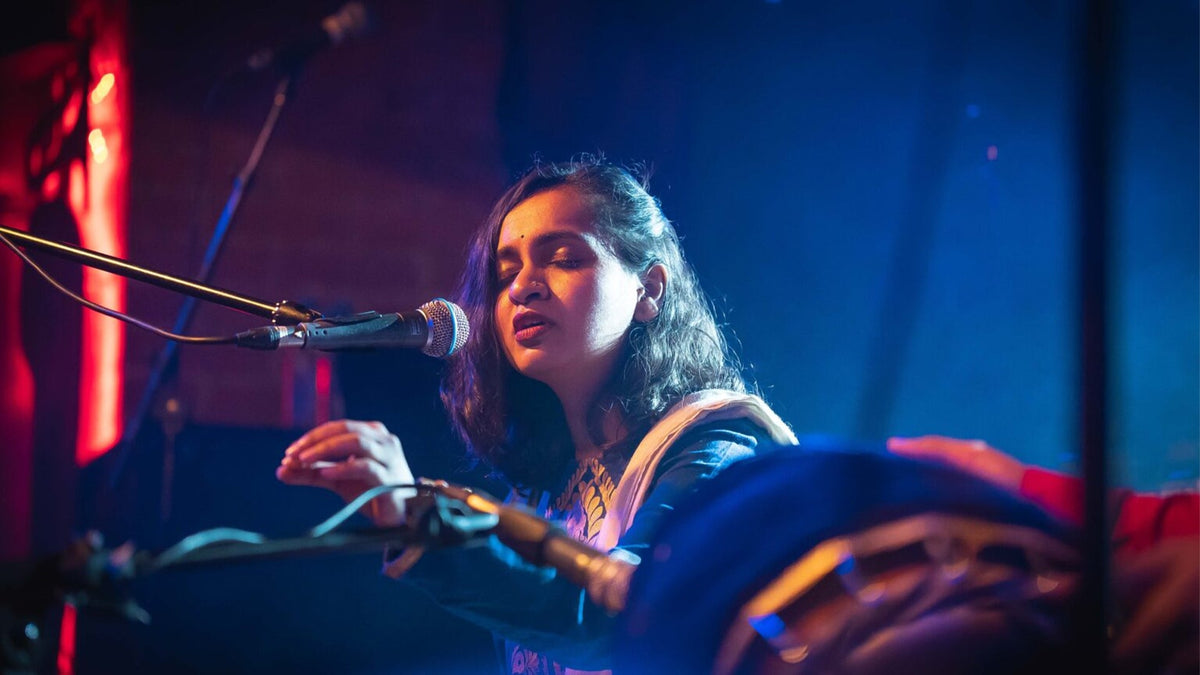
When Shakti brought together John McLaughlin, L. Shankar, Zakir Hussain and T.H. "Vikku" Vinayakram in the 1970s, the meeting of jazz and Indian classical music acquired a new vocabulary. Their music relied on improvisation and close listening. For Varijashree Venugopal, that conversation began at home.
Born to Carnatic musicians H.S. Venugopal and T.V. Rama, Varijashree grew up around her father's flute lessons, concerts and recordings. She could identify ragas by ear as a toddler and began formal training under her father before studying with other gurus. "Both my parents are musicians and my first Gurus, and that is how music became my first mother tongue," she has said in interviews.
She began experimenting with that curiosity herself. Varijashree has described the Carnatic sargam syllables, Sa Ri Ga Ma Pa Da Ni, as her "alphabet" when approaching unfamiliar music. Inspired by jazz scat, she started adapting jazz compositions through sargam, eventually calling the technique "Carnatic scat".
That vocabulary has travelled into her collaborations. On "A Rock Somewhere", with Jacob Collier and Anoushka Shankar, her voice became part of a Grammy-nominated performance. She has since worked with musicians including Victor Wooten, Hamilton de Holanda and Béla Fleck, finding ways to place Carnatic phrasing inside jazz settings.
The connection she explores predates her career, and it began with the recordings her parents played at home. It became part of her musical thinking early and naturally as she grew up listening to the space between them.
Comments