
The Gramophone Comes to India: Birth of India’s Music Industry - Indian Audio Heritage
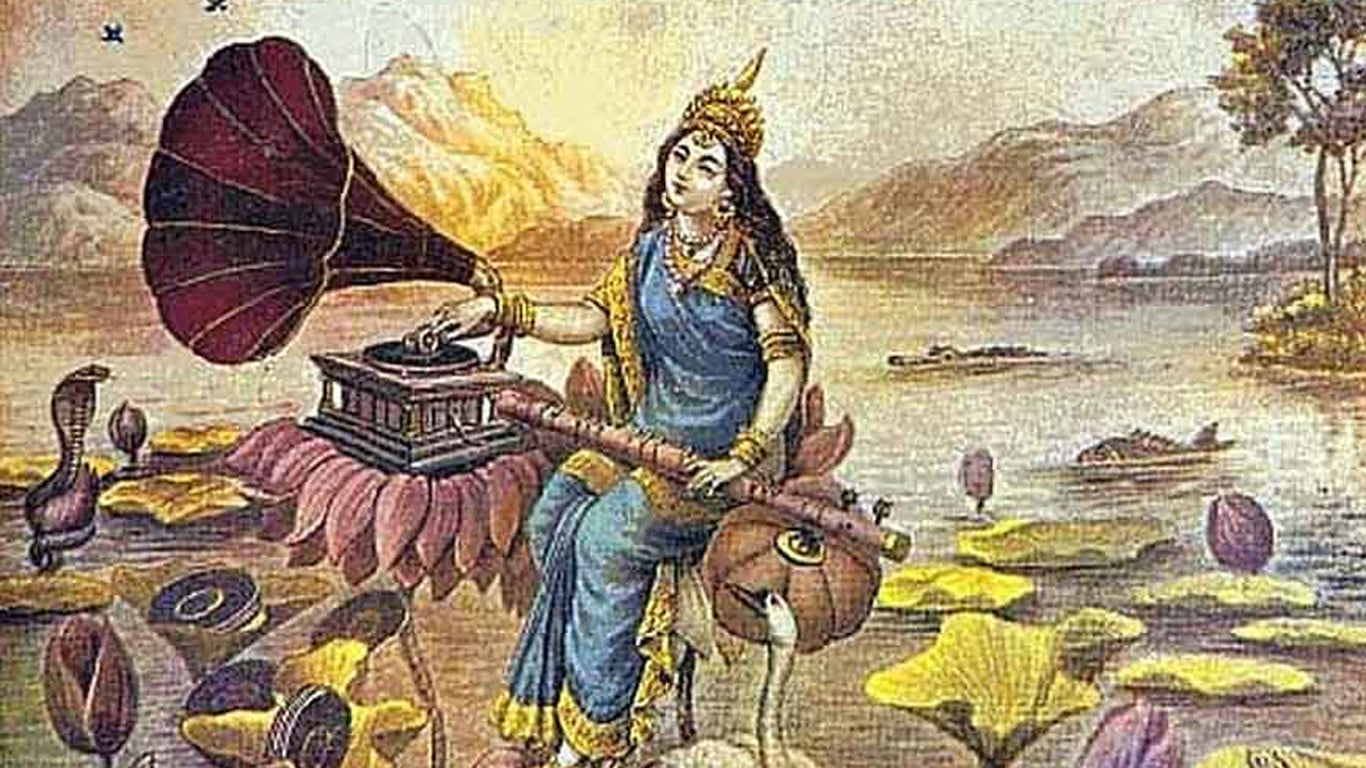
Edison’s phonograph of 1877 and Emile Berliner’s improved version, the gramophone, were landmark inventions that had a profound cultural impact. The advent of recorded music allowed for cultural cross-pollination on an unprecedented scale and gave birth to the music industry across the world.


Berliner’s Gramophone Company realised the global potential of their 78rpm records, and quickly set up shop globally. A Calcutta office was established in 1901, and by the end of 1902, the first Indian “recording expedition” to produce records for an Indian market was underway.
The most successful of the early recordings proved to be classical vocal performances by “Baiji’s”, the highly trained female musicians and dancers whose tradition had roots in the sophisticated entertainers of the Mughal courts. Gauhar Jaan, who caught the attention of the Gramophone Company during the 1902 expedition, went on to become India’s first “Gramophone Star”. Being an accomplished bi-lingual singer, she recorded over 500 songs with the Gramophone Company that represented the diversity of Indian music.

By 1908, a pressing plant was set up near Calcutta to keep up with increasing demand. The Gramophone Company formed alliances across the country and established a near monopoly; producing records under various labels which included the world-renowned HMV with the iconic image of the dog looking eagerly into a gramophone. A notable indigenous competitor was the National Gramophone Record Manufacturing Company of Bombay with their iconic label “Young India”.


National formed an alliance with Prabhat Films, and their 1934 releases of songs from the 1933 film Sairandhri proved to be a hit. This established the long-standing Indian tradition of song releases accompanying films, and solidified the inexorable unison of music and cinema in Indian culture.

The 78rpm records remain to be a significant part of Indian musical heritage, and in-fact, India clung onto the 78s for over a decade after they were superseded by the LP, another topic that we will definitely cover in much detail later in this series.
Read more: Grooves of Freedom: The Gramophone During India’s Independence Struggle - Indian Audio Heritage


Comments
Hemant Durgaprasad —
matter of pride to hear music,video,other cultural images in zopapatties as scarcity of places and avoiding travel should be problem as per ACt and reforms.
Samir Surendra Desai —
The Device for listening to specific actor songs should be a Gramophone Ltd ;during the ERA ! television should have entertained before passing these catalogue album songs that should be original and secrets deal; Even telephone e and its connection where quoted high, the trader, medicine practitioner, bussiness premises where granted monopoly for owning such classical company products! Mass of People should be seen in movies,later on street hearing the voice; aired , A worker hard earned money where wasted /….C s desai,Scranton,PA ,usa 11:29PM ET , cocurrent to INDIA Eastern and northern Politics with multi state monopoly with rich influential Peoples.
Crypto Kelly —
I totally got cured from my HSV with a strong and active herbal medicine I ordered from a powerful herbalist and it completely fought the virus from my nervous system and I was tested negative after 11 days of using the herbal medicine. I’m here to let you all know that herpes virus has a complete cure, I got rid of mine with the help of Dr Lucky and his herbal exploit. Contact Dr Lucky on email WhatsApp and Facebook messenger FB page:👇 https://www.facebook.com/remedyforherpes Or Email Address:🌿👇 drluckyherbalcure@gmail.com Or WhatsApp him now:❤️👇 +2347071651140